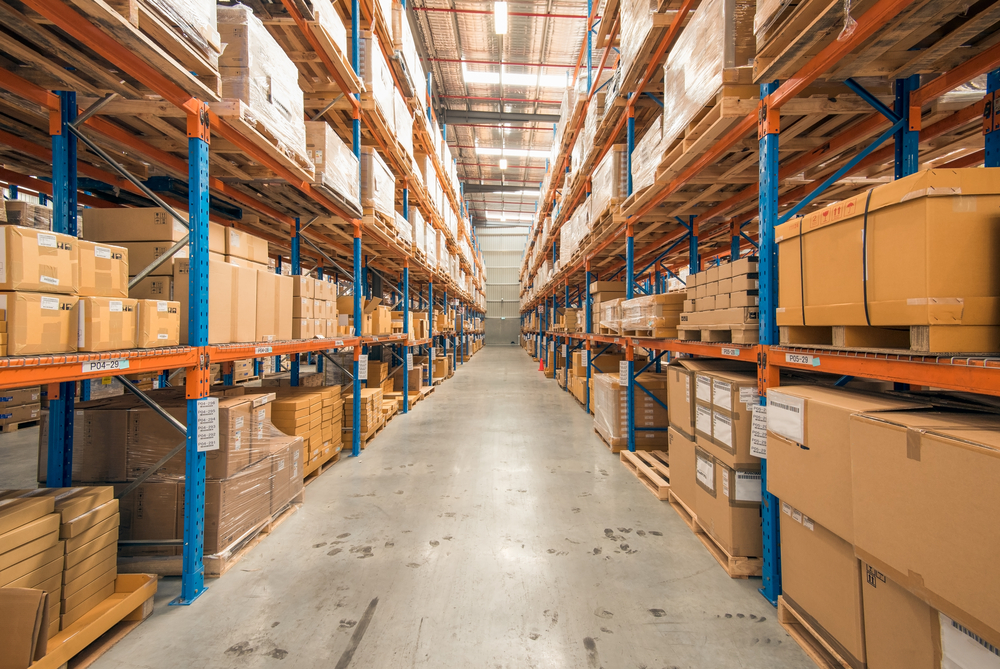
When your business needs room to grow, finding the right storage space is pivotal to inventory management, archiving documents, or simply freeing up valuable workspace at storage facilities.
The choice between warehouse storage and self-storage is a key decision that can greatly impact a company’s operational efficiency and bottom line. So, which one is right for your business?
While warehouse storage spaces typically offer large, customizable areas perfect for high-volume inventory storage, business and commercial storage units tend to provide a more flexible, accessible option. These two distinct commercial storage solutions each come with their unique advantages and potential drawbacks.
Understanding the nuances of warehouse vs self storage is crucial to selecting the storage solution that best fits your business needs. Let’s dive into the world of business storage units, comparing warehouse storage with self-storage to help you make an informed decision.
Warehouse Storage
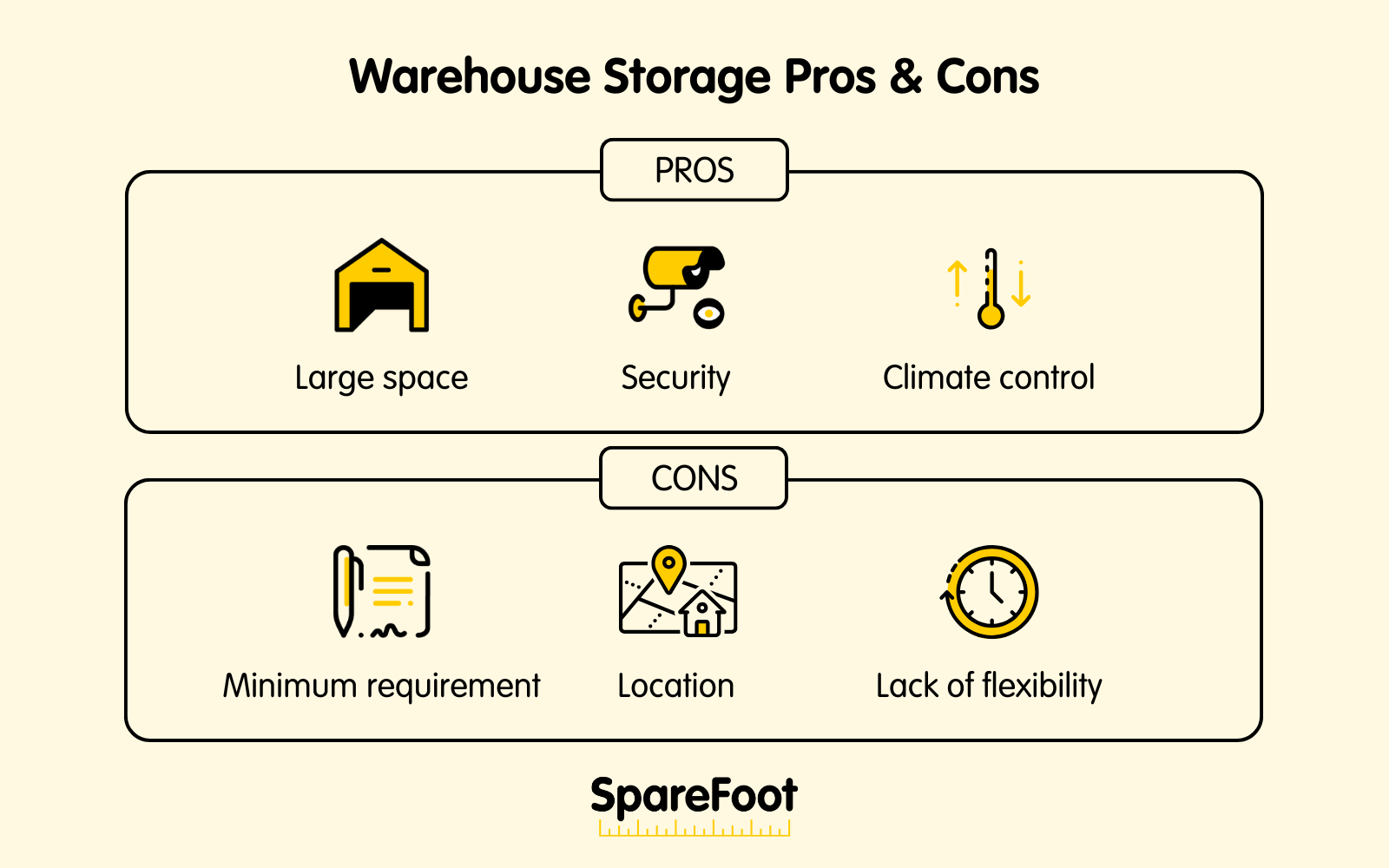
Warehouse storage provides a large-scale solution typically housed in an expansive, often customizable, area that can rival a small warehouse operation. Suited for businesses with considerable storage space needs, these storage facilities offer the necessary square feet for storing large volumes of inventory or oversized items.
“Warehouses can be customized to meet the specific needs of your business, such as installing racks, shelves, and other storage systems that are tailored to your inventory,” said Brooke Green, the marketing manager at HWY 83 Storage.
Warehouse storage pros:
- Large space: Unlike self-storage units, warehouses offer an expansive area that’s ideal for businesses dealing with bulky items or significant inventory volumes. On a square foot basis, warehouses are typically cheaper than self-storage units.
- Climate control: Warehouse storage spaces are generally equipped with climate-controlled storage features, protecting your items from extreme temperatures, humidity and other damaging environmental factors.
- Security: Enhanced security measures, including surveillance cameras, security guards, and restricted access, help safeguard your inventory against theft or damage.
“For businesses with large inventory volumes, warehouses can provide a more cost-effective solution per square foot,” said Josh Riutta, a professional roofer and owner of Mikku and Sons Roofing.
Whether you’re looking for long-term storage for excess inventory or need static shelving systems for organized warehouse storage, these facilities can accommodate various business models. Some warehouse storage providers also offer bonded warehousing options for businesses dealing with imported goods.
Warehouse storage cons:
However, despite these notable benefits, it’s important to consider the potential drawbacks:
- Location: Warehouses are often situated in industrial areas or outside city centers, which could pose accessibility challenges if you require frequent inventory access.
- Minimum storage requirement: Some warehouse providers may require you to commit to a minimum storage space amount, potentially more than you need.
- Lack of flexibility: Warehouses may not offer the same level of flexibility as self-storage units when it comes to rental terms. This poses a potential challenge if your storage needs fluctuate.
Businesses that benefit the most from warehouse storage include:
- Businesses with larger inventory requirements, such as wholesale retailers and large e-commerce businesses
- Manufacturing companies require storage for large machinery or parts.
- Large regional service providers with equipment storage needs
The combination of ample space, customization, and strong security measures makes warehouse storage a robust choice for these high-volume businesses.
Self-Storage for Business
Self-storage units are another popular option for businesses, offering a different set of advantages compared to warehouse storage. These storage facilities generally consist of individual storage units in various unit sizes that are rentable on a month-to-month basis, functioning as convenient mini storage solutions. This makes for an accessible short-term storage solution for businesses with fluctuating storage space needs.
Self-storage for business pros and cons
| Self Storage Pros | Self Storage Cons |
| Flexibility: These units offer greater flexibility in terms of space, lease length, and access, making them an excellent choice for businesses with evolving storage space requirements. Many facilities offer drive-up storage and drive-up units for easy loading. | Limited Space: Self-storage units may not offer sufficient space for businesses with large inventory volumes or bulky items. |
| Convenience: Typically located within urban areas, self-storage facilities are readily accessible for businesses needing frequent inventory access. | Lack of Climate Control: Not all facilities offer climate-controlled units, potentially problematic for temperature-sensitive items. Businesses should prioritize climate control when storing electronics or sensitive materials. |
| Security: Self-storage facilities often implement security measures such as surveillance cameras and gated access, protecting your inventory. | Limited Customization: Unlike warehouses, self-storage units may not offer extensive customization options |
Businesses that benefit from self-storage include:
- Small e-commerce businesses
- Local retailers and resellers
- Service providers and tradespeople with limited space for tools and supplies
- Businesses needing temporary storage during an office move or renovation
Many businesses find these units provide the perfect balance between mini storage convenience and professional storage space. Self-service storage facilities often include vehicle storage options alongside standard storage units, making them versatile storage facilities for growing companies.
Comparing the Costs of Warehouse and Self Storage
When comparing the costs of warehouse and self-storage, several factors come into play, including rental fees, additional costs such as utilities and security, and the size and location of the facility.
Warehouse Storage Costs
Warehouse storage providers often charge based on square feet, with larger storage spaces commanding higher fees. Additionally, warehouse storage facilities might have additional costs, including utilities, security measures, and potential customization for small warehouse operations.
Warehouse leases are often triple net leases, which means the tenant is responsible for the owner’s operating expenses. This includes property taxes, maintenance and utilities, and insurance fees. Rent consists of the base rate, plus the estimated expenses for the rental period, which is typically charged either monthly or annually.
“On a per-square-foot basis, warehouses can offer better value for large-scale storage needs,” Riutta said.
Self-Storage Costs
These units are generally priced by the size of the individual storage unit, with mini storage options typically being the most affordable. Costs can vary widely based on the location of the facility and the size of the unit. Unlike warehouse storage, these units often include costs such as security measures in their monthly rental fee, potentially making budgeting simpler.
The location of storage facilities can also significantly impact the cost, with pricing varying based on market demand. Prime urban locations are generally more expensive than rural or suburban areas due to higher land and property costs.
Through June 2023, the average year-to-date price to rent a storage unit was $1.07 per square foot, according to SpareFoot.
Considerations When Choosing Between Warehouse and Self Storage
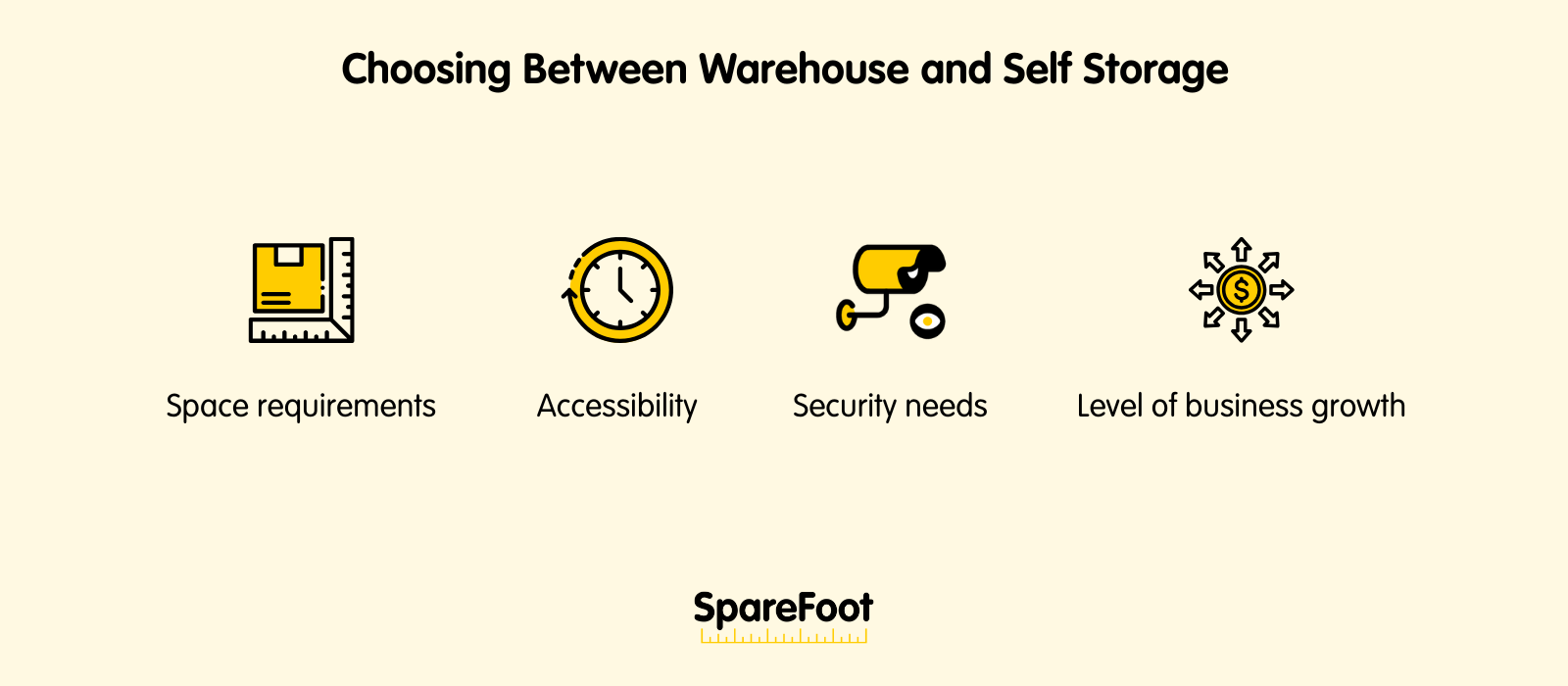
When deciding between a warehouse and self-storage, consider the following:
- Space requirements: How much inventory do you need to store? Warehouse storage is ideal for larger inventory storage volumes, while self-storage units can accommodate smaller, more flexible needs in various unit sizes.
- Accessibility: How often do you need to access your inventory? Storage facilities usually offer more frequent access, with many offering drive-up units for convenience.
- Security needs: Both warehouse storage and storage facilities provide security measures, but warehouse storage operations often have more advanced protection.
- Level of business growth: Warehouse storage is a bigger investment requiring long-term storage commitment, while the month-to-month nature of flexible units makes them ideal for short-term storage needs and newer businesses that are still growing.
Always ask about lease terms, security measures, additional services, and potential for customization when considering different storage options.
Additional Services Offered by Storage Facilities

Both warehouse and self-storage facilities may provide extra services that can add value to your storage solution:
- Transportation: Some facilities offer pick-up and delivery services, which can save you time and resources.
- Packing and unpacking: A few facilities may provide packing and unpacking services, a beneficial feature for businesses lacking manpower or time.
- Climate-controlled storage: For sensitive items, storage facilities offering climate-controlled units can be a major plus, protecting your inventory from extreme temperatures or humidity. Both warehouse storage and mini storage facilities may offer this feature.
- Storage units with electricity: If your inventory needs power, such as for charging or temperature control, this additional service, available at some small warehouse facilities and other storage facilities, can be a game-changer.
All these services can greatly enhance the convenience and efficiency of your storage solution, so be sure to ask about them when choosing a facility.
Your Business, Your Space
Storage space can make or break your business flow. Whether you choose the capacity and robust security measures of warehouse storage or the flexibility and easy access of flexible units, understanding your storage facilities options is crucial. Your choice shapes your business destiny. Juggling costs, location, space, and extra perks is your jigsaw puzzle. So, before making your pick, weigh up the pros and cons and set your business on the right track!

Andreea Draguleasa
Andreea Draguleasa showed an affinity for foreign languages and literature at an early age and started writing when she was 6. She studied journalism, advertising, and public relations at the University of Bucharest and worked as a content writer for a tourism agency and as a journalist for a magazine in the hospitality industry until 2010. After seven years as marketing manager for a Home & Deco online shop, she realized that learning something new every day brings her the most joy, so she went back to researching and writing informative articles. Through her experience traveling the world, she's picked up tips and resources she now shares on self storage solutions. When not writing about home organizing and storage, Andreea spends most of her time reading, playing video games, and spoiling her cat.