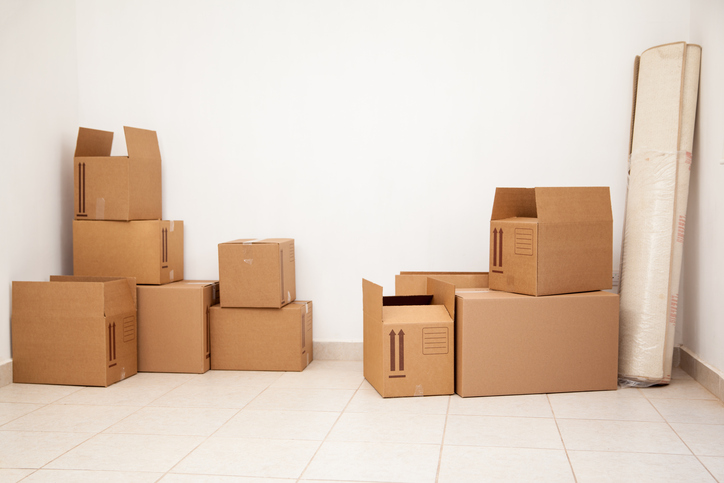
If you’re getting ready to move to a new place, no matter how far you’re going, you’ll want to make sure the boxes you use to pack your things are the right size and quality. There are plenty of options out there to get your belongings from point A to point B, but in this article, we’ll go over some tips on choosing the right size and type of container for everything you’re planning to move.
Where can I find moving boxes?
Reusing your leftover cardboard shipping boxes can be a cost-effective way to pack your things, and you may be tempted to seek out whatever boxes you can find for free. However, if you want the most protection and the highest quality, you’ll want to look for brand new heavy-duty corrugated cardboard moving boxes. You won’t pay much for these boxes, and they can be found everywhere from department stores like Target to office supply stores like Staples.
What should I look for when buying moving boxes?
Corrugated cardboard moving boxes, also called kraft boxes, are some of the most widely available and widely used packing and shipping containers out there. Here are a few reasons why:
- They’re lightweight. Moving boxes are made of a fluted corrugated paper medium between two flat paperboard liners, keeping their weight low without sacrificing their strength.
- They’re strong. Moving boxes can put up with a surprising amount of weight and punishment. Their strength is measured in two ways: the older Bursting Strength Test (BST), which measures in pounds (#) the force it would take to rupture or puncture a box, and the newer Edge Crush Test (ECT), which gauges the stacking strength (max pounds per load) by measuring the minimal pounds per linear inch it would take to compress the edges of a box. You can see BST and ECT numbers on box labels or on manufacturer websites to see how strong they are.
- They’re cost-effective. Moving boxes are made of easily available recycled paper, making them cheap to produce and cheap to purchase.
- They come in many shapes and sizes. Moving boxes often come in standardized sizes–no matter what brand you choose, or whether you’re a residential mover or a business owner, you’ll find consistent sizing between boxes. If you need to pack special or oddly shaped items, there are plenty of additional specialty sizes available too–for example, leading box distributor Uline offers more than 1,450 sizes.
- They’re both recycled and recyclable. Moving boxes are often made of recycled material, and can be both reused and recycled after use. It’s even possible to resell boxes you’ve only used once and don’t need any more, as they can put up with punishment for multiple uses–and on the flip side, it’s possible to get gently used boxes cheaper than new ones.
Industry strength standards for moving boxes are:
| Box Type | Bursting Strength Test | Edge Crush Test | Max Load |
| Standard box | 200# | 32 | 40 pounds |
| Heavy duty | 275# | 44 | 65 pounds |
| Heavy duty (double-walled) | 275# | 48 | 80 pounds |
What size boxes will I need for my move?
A good rule of thumb for deciding how many of each size box you’ll need is the heavier the item, the smaller the box you should pack it in. This might sound counterintuitive, but the weight of a small but heavy item will be better supported by the strength of one dedicated smaller box than by a larger box where its weight might put a hole in a larger, more spread-out surface. On the flip side, lighter and bulkier items such as clothes can all be put into a larger box safely.
Moving boxes most commonly come in three different sizes–small, medium and large. Let’s go over what you can use them for.
Small
Dimensions: 18” x 12” x 12”
Volume: 1.5 cubic feet
Small moving boxes are best suited for smaller but heavier items like books, canned food, and tools. You should also use these boxes for more fragile items such as vinyl records, as they’ll be kept separate from other items that might damage them.
Medium
Dimensions: 18″ x 18″ x 16″
Volume: 3 cubic feet
You’ll probably find yourself using medium moving boxes most often. They’re suited to many sizes of items, and can handle everything from toys to T-shirts. Small appliances that don’t need the protection of a small moving box can also fit in these boxes.
Large
Dimensions: 18″ x 18″ x 24″
Volume: 4.5 cubic feet
Bulky items that are difficult to carry on their own will fit well in a large moving box–such as lamps, small furniture, and wall decorations. It’s a good idea to put sheets and towels in these boxes to fill in space, saving space elsewhere while adding extra padding.
Specialty boxes
There are several specialized box sizes out there that can help simplify the packing process if you need them. Let’s go over some of the most sought-after.
Extra-large moving boxes
Dimensions: 23″ x 23″ x 16″
Volume: 4.9 cubic feet
An extra-large box will cover just about anything you can’t quite fit in a large size box. Bulky bedding, sports equipment, large lamps, and other items you’d rather not carry separately should all go in one of these.
Wardrobe boxes
Dimensions: 24” x 24” x 46”
Volume: 13.4 cubic feet
A wardrobe box is a tall, front-facing box that opens from the front and has a rod inside to hang clothes on. These boxes are intended for you to move your clothes from a closet directly to the box without removing the hangers, but you can put any long and thin items inside them to fill in space–hockey and lacrosse sticks, for example.
Banker boxes
Dimensions: 15″ x 12″ x 10″
Volume: 1 cubic foot
While “Banker Box” is a brand name, the term “banker box” usually refers to a small box with handle cutouts and a removable lid that can be put together without tape. These boxes are meant to carry important files and documents, and are sized to hold a stack of folders or sheets of paper. We don’t recommend these for moving anything that isn’t files, but if you’re moving a short distance and don’t have much to pack, a banker box should be more than enough for your needs.
TV boxes
Also known as picture boxes, TV boxes are typically adjustable between 32 inches to 70 inches wide. As the names imply, these boxes are meant to transport both large televisions and framed wall art. You can also use these to transport other fragile, large, flat items, such as mirrors.
How much will moving boxes cost me?
You’re always going to need more boxes than you think you will, and when you consider packing tape and other materials, you’ll probably wind up spending a good amount on keeping your stuff protected. Thankfully, even really good boxes aren’t very expensive–here’s a general guide for average moving box prices:
- Small moving boxes: $.75/box
- Medium moving boxes: $1.30/box
- Large moving boxes: $1.50/box
- Wardrobe boxes: $10/box
Check with your moving company for suggestions, or shop around at major box suppliers such as SpareFoot, U-Haul, Uline, U-Pack, YouMoveMe, and local big box stores to find the brands you trust and the sizes you need. It’s also worth looking into moving box package kits that contain several types and sizes to cover your entire move. If you’re feeling resourceful, there are several places you can find gently used boxes for free or very cheap.
Be sure you have a dry place to store your boxes as you fill them. Humidity can weaken boxes, and temperature changes can cause them to slightly expand and contract, making it difficult to accurately judge their size.
What about using plastic storage tubs as moving containers?
Plastic storage tubs are an appealing alternative to cardboard boxes, but there are also plenty of downsides. They’re intended for storage rather than moving, they’re more expensive than cardboard boxes (a 20-gallon standard tub runs $5 to $6, for example), they’re prone to popping open during the move, and they take up more room than boxes when they’re stacked up.
However, these tubs are better protected from the elements than cardboard boxes, so items that might be damaged by humidity and temperature shifts can stay in these containers for much longer. Plastic tubs often have their own handles, and can be zip tied shut instead of taped shut. Some larger tubs also have wheels, literally taking some weight off your shoulders.
Plastic storage containers to consider
Some of the best-rated tubs include:
- 30-quart Sterilite Ultra Latch
- 20-gallon Rubbermaid Brute
- 19-gallon IRIS USA Store-It-All
Renting tubs from moving companies
If you’d rather not buy your own tubs, you can rent plastic tubs from a moving company for a fixed two-week period. However, if you need these tubs for longer than that, you’ll end up paying more over time than you would with your own containers.
Bottom line: Cardboard moving boxes are well-suited to almost any moving need you might have, and they’re inexpensive and easy to find and store. However, if you plan on keeping items in long-term storage, it may be worth investing in some plastic storage tubs even before you start your move.
When you’re ready to make that move, be sure to try SpareFoot’s self storage search tool to help you find storage units that meet your needs–we promise it’ll make things much easier, whether you’re traveling a short distance or moving cross-country.

SpareFoot
SpareFoot is the largest marketplace for storage, making it simpler to move and store your stuff. Our website lets you compare the most storage options nationwide and pick the best solution for your needs, whether it's traditional self-storage or full-service storage.