It’s been said that the two best days while owning a boat are the day you bring it home and the day you get rid of it, and you might find some truth to this if you’re not storing your boat properly between trips and during the off-season.
Shoving your boat into a garage or just leaving it in your driveway are both risky options that can lead to mold, rust, and corrosion.
If you want to make your boat last a long time in storage, you’ll find plenty of long-term options to park it and protect it from the elements. For the best results, though, your boat needs to be prepared and cleaned before you store it.
In this article, we’ll go over some popular and inexpensive storage options for boats and give you a checklist to help you clean and prep yours for short- and long-term storage.
How do I choose the right storage location for my boat?
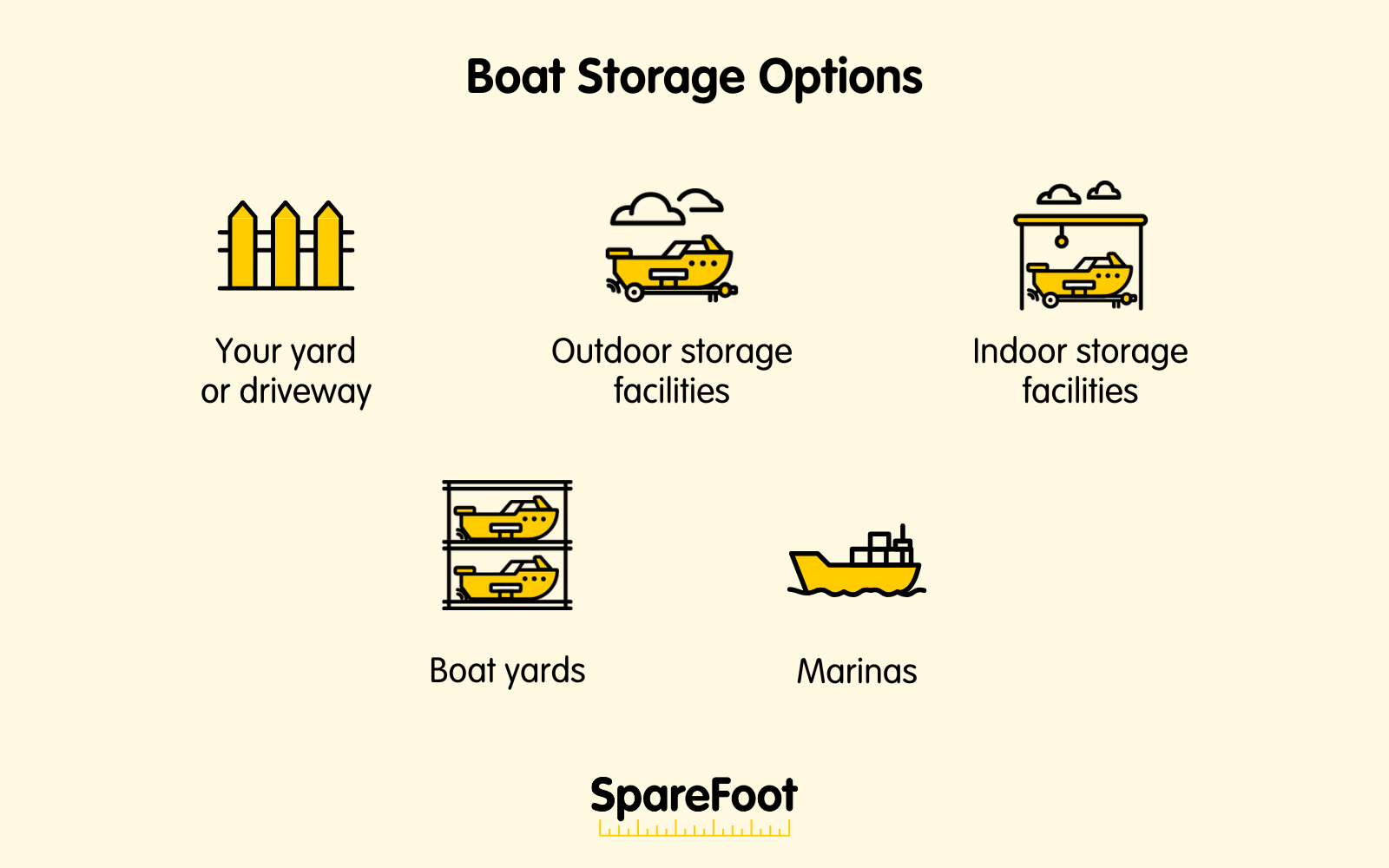
The best boat storage for your needs depends on what those needs are. Here are a few popular choices, from least to most expensive:
- Your yard or driveway. The most inexpensive option is just putting your boat on your own property. You can do this for free, but you’ll also expose your boat to the elements, and some neighborhoods and HOAs don’t allow boats in driveways or yards.
- Outdoor storage facilities. An inexpensive marina or an outdoor boat parking lot is a good choice for sailors who can’t keep their boat on their property but still want to save money. However, you should take special care to weatherproof your boat if you leave it outdoors for a long time.
- Indoor storage facilities. Indoor self-storage for boats is more expensive than parking a boat outside, but you’ll receive protection from temperature and humidity changes (especially with climate control) and improved security. Most vehicle storage facilities also offer drive-up access to make loading and unloading easier.
- Boat yards. You’ll find specialized boat yards near bodies of water. These facilities use lift systems to store smaller boats in a high-rise garage, and while you’ll pay more than if you park your boat somewhere yourself, the convenience is worth it for some sailors. Some boat yards even have on-site maintenance included.
- Marinas. If you’ve got the budget for it, a marina is a perfect solution for larger boats and convenient storage. You can dock your boat safely on the water, you’ll have easy access when it’s time to sail again, and you’ll receive benefits like marina country club memberships.
How do I get my boat ready for storage?
Before you do anything else, look over your boat for anything concerning. Areas like hoses, wires, and engine connections are where most mechanical failures happen, and you’ll want to zero in on problem areas before they become problems.
Once you’ve done this check, do all of the following to prepare for storage, whether or not you’re storing short- or long-term:
- Clean the boat. Dirt, dust, stains, and barnacles can all lead to damage if they aren’t taken care of pre-storage. Have the exterior and interior washed well, clean the carpets and deck, and scrape the hull free of any barnacles or other hangers-on.
- Inspect the hull. Small cracks in the fiberglass gelcoat can lead to leaks and further damage to the hull, so examine it for any damage and apply a protective wax, like 3M Perfect-It Gelcoat Light Cutting Polish + Wax.
- Inspect the bilge. Any oil leaks and damage to the bilge surface should be addressed ASAP. Scrub out any oil spills with a wire brush, then apply lubricant with a bit of antifreeze to keep the bilge in good shape.
- Inspect the outdrive. Check shafts, propeller, nuts, and pins for loose connections or rust.
- Check on the system. Examine fuel, electrical and cooling systems for leaks or damage.
- Replace broken hoses and lines.
- Inspect the throttle and replace any old or broken parts.
- Clean and tighten corroded or loose electrical connections.
- Inspect and clean navigation lights and replace them if necessary.
- Perform engine maintenance:
- Inspect and clean the flame arrestor.
- Check and replace engine air and fuel filters as needed.
- Run the engine, then change the oil and oil filter.
- Flush the engine with fresh water.
- Inboard engine: Drain the water / Outboard engine: Store in a vertical position.
- Use fogging oil in the carburetor and cylinders.
- Test the gauges and alternator for good charging and operation.
- Check the battery condition and make sure it holds a charge.
- Fill the fuel tank and add a fuel stabilizer.
- Clean out the interior. Remove all detachable gear, such as electronics and safety equipment, and spray everything else with vinyl cleaner before ventilating. If you live in a particularly humid area, use a commercial moisture absorption product like DampRid.
- Cover the boat. Choose a cover specific to your boat model if you can for the best fit, and make sure your cover allows air to flow through so trapped moisture doesn’t cause mold or rust.
If you’re storing a boat on a trailer, make sure the trailer tires are off the ground and protected from damage.
How do I store a boat outside?
If you’re on a budget and storing your boat outdoors, choose a weatherproof cover for your boat. Find the snuggest fit possible and choose a poly or vinyl tarp to keep moisture and other weather events away.
- You can make your own frame to keep snow from accumulating on the tarp and causing damage. Be sure the cover is securely tied to make sure it doesn’t blow off or tear.
- Looking just for some shade and wind protection in the high season? Here’s a guide on building a simple boat shelter based on a popular camping design.
- Do not wrap your boat in plastic unless advised to do so by your marina or boatyard. Shrink-wrapping has to be done correctly, allowing for ventilation to prevent moisture buildup.
Check out these storm survival strategies for your boat if you live in an area prone to hurricanes.
How do I keep wildlife away from my boat?
If you’re storing a boat outdoors or on your property, take a few extra steps to check for nests and infestations, and apply a few remedies to keep pests away.
- Semi-aquatic mammals. Always wash your boat thoroughly after taking it out, especially if you’ve been fishing, as the smells can attract otters and other animals. Use boat stands to keep mammals from climbing on board, and wrap hoses and wires with rodent-proof sleeves.
- Birds. A tight-fitting cover should prevent any nests from popping up, but you can go the extra mile and apply flashing reflective objects to your boat that deter birds from making a home on your boat. A fake owl is also effective.
- Spiders and insects. Cleaning your boat well helps prevent insects and spiders from being attracted to stains or mold. Pest-proofing sprays will also help, whether it’s a camping or boating repellent or a natural repellent such as peppermint oil and vinegar.
- Mussels. Northern sailors can keep zebra and quagga mussels away from their boats by using a repellent such as the non-toxic Dock Disk.
What should I consider when storing a boat long-term?
Before doing anything else, read your boat’s owner’s manual to see what the manufacturer recommends. Different boats have different storage needs, and the manufacturers know their products’ needs best.
Once you’ve prepared your boat and stored it, check in on it once in a while to make sure there aren’t any stains or leaks and repair anything that needs it. If you’re storing your boat in water all season, check the mooring lines and fenders on each inspection to ensure they are secure and in good condition.
How do I get insurance coverage for my boat while it’s in storage?
Your homeowner’s insurance policy might have coverage for smaller boats, but it usually excludes marine-specific risks like salvage work, wreck removal, pollution or environmental damage. To fully cover your boat in the event of a storage failure, look into boat insurance policies.
Coverage depends on how often you use your boat and where you’re located. Consider an “all-risk” policy to cover any damage outside of regular wear and tear. If you’re in an area prone to storms and hurricanes, have your storm readiness plan ready to show your insurance provider; this can even save you some money in some cases.
You can find cheaper insurance policies depending on the season and your location. Insurers offer lower rates for sailors storing their boats during the winter, as winter weather means more damage and more insurance payouts. Boats in freshwater areas also cost less to insure than boats in saltwater areas; saltwater often leads to more damage.
Regularly review your boat insurance policy, and make sure it fits where and how you store your boat. If you change your storage location, the insurer might say the new location poses different risks and, therefore ,might require specific coverage adjustments.
How do I prevent theft and vandalism on my boat?
Stay vigilant to keep criminals away from your boat, especially if you live in areas prone to boat theft. Florida accounted for 20% of watercraft thefts in the U.S. in 2022, closely followed by California, Texas, and Washington.
Regular check-ins will help you prevent theft and vandalism, and the following steps will further keep criminals away.
- Lock your boat. If your boat is on a trailer, use a high-quality chain and lock to secure your boat and trailer to something immovable, or secure it with a heavy-duty pad or disc lock. While your boat is in the water, secure it to the dock with a locked steel cable.
- Install an ignition killswitch. These simple devices automatically shut off the engine if you’re not there, stopping any thieves from easily starting your boat.
- Install an alarm system. A basic boat alarm is usually enough to keep criminals away, but for maximum protection, add snap, motion and entry sensors to the Siren 3 Pro main unit from Siren Marine.
- Install motion-activated lights. These lights can easily scare off an intruder. The NetBright 200-lumen LED spotlight from Mr. Beams is a good pick for only $30.
- Store valuable equipment securely. Fish finders, radios, and fancy GPS systems are often targets for theft, so don’t leave them out in the open on the boat.
- Get a GPS tracker. If your boat is moved without your permission, a tracker will send you an alert and allow you to easily locate the boat.
- Securely store documents. Your title and registration should be stored separate from the boat.
How do I find the right storage facility for my boat?
From preparation to regular check-ins, you should now be well-equipped to store your boat anywhere. If you’re storing it at home or outside, you can protect it from weather, pests, and theft; if you’re planning on storing it in a storage facility and you want to compare prices, you’re in the right place! Take a look at SpareFoot’s built-in search tool to find and match up boat storage facilities near you, filtering by the amenities you need.

Andreea Draguleasa
Andreea Draguleasa showed an affinity for foreign languages and literature at an early age and started writing when she was 6. She studied journalism, advertising, and public relations at the University of Bucharest and worked as a content writer for a tourism agency and as a journalist for a magazine in the hospitality industry until 2010. After seven years as marketing manager for a Home & Deco online shop, she realized that learning something new every day brings her the most joy, so she went back to researching and writing informative articles. Through her experience traveling the world, she's picked up tips and resources she now shares on self storage solutions. When not writing about home organizing and storage, Andreea spends most of her time reading, playing video games, and spoiling her cat.