
Every year, it’s a paperwork tsunami for businesses and healthcare providers—we’re talking about everything from invoices to patient files, confidential information, and even tax forms that need proper document storage boxes and archival storage solutions. Yet, something vital is still quite easy to miss: keeping those paper documents safe.
This may sound like a challenge for crowded offices only, but individuals with limited space can struggle with important document storage, too. The thing is, despite going digital at breakneck speed, our paper documents are still abundant and, surprisingly, at risk.
Decade-long research on healthcare data breaches shows that paper and film records are still among the top three sources. These numbers are a wake-up call for all sectors to step up their paper storage game. Plus, with U.S. data privacy laws entering a new era in 2023, it is time we all paid closer attention to how we handle and store documents at the office and at home.
So, whether you are steering a business or sorting through personal papers, take a moment to rethink that overflowing filing cabinet. Say goodbye to stashing papers in forgotten drawers or leaving them out in the open.
Paper documents can be really risky if we don’t handle them correctly. It’s time to sort them out—secure what’s important in archival boxes, record storage boxes, or dedicated storage facilities, and safely discard what’s not.

The Need for Document Storage
Why fuss over document storage? It’s simple. Safekeeping papers means protecting the core of your business or personal history. The ultimate goal is to shield sensitive information from the prying eyes and sticky fingers of data thieves.
Now, here’s why a solid papers storage plan is non-negotiable:
- Data protection. It’s your frontline defense, keeping vital information from vanishing or getting vandalized.
- Compliance. Well-known laws like HIPAA or the more newly enforced data privacy laws in California, Colorado, Connecticut, Utah, and Virginia are rules businesses need to play by to stay in the clear, legally speaking.
- Space-saving. When you clear out the clutter, you’ve got yourself a workspace that breathes, inviting productivity instead of chaos.
All these benefits would not hold so much weight if it weren’t for the risks associated with improper paper storage. And there are two big ones that sure are real and timeless:
- Unauthorized access. When confidential information and papers aren’t stored right in document storage boxes or firelock vaults, they could end up anywhere, with anyone. This can lead to identity theft.
- Loss and damage. A leaky roof, a spilled coffee, an unattended candle, and poof! Important papers could be gone for good. Sometimes, just misplacing documents can result in loss, as you or someone else in your home or office could accidentally throw them away or shred them to pieces.
So, let’s get it straight: Proper paper storage isn’t just another box to tick. It stands for data integrity, legal compliance, and yes, even peace of mind. Without it, we are all a step away from a data disaster.
Types of Documents to Store
When it comes to keeping documents, not all papers are created equal—each category has its own shelf life. Some need to be within arm’s reach for daily use, while others, like those “just in case” files, require a safe spot where they can lie dormant but secure.
- Legal documents, for instance, contracts, property deeds, court records, and wills. These are the backbone of your legal identity, rights, and obligations—along with family heirlooms like letters and historical records. Store them for life in acid-free storage boxes to prevent deterioration.
- Financial records like receipts, tax returns, and investment statements. Most financial records for income tax returns need a three-year stint in storage for tax purposes, but some documents for small businesses and self-employed individuals should be kept for seven years. Better safe than sorry, as tax audits and financial disputes can arise later than you expected.
- Medical records. While insurance companies usually keep records for up to 10 years and healthcare providers follow strict regulations like HIPAA, it is best that individuals retain their own medical documents for as long as possible.
- Personal documents like birth certificates, passports, social security cards, and marriage licenses. These lifetime documents are your personal identifiers and should be stored securely in archival file folders within acid-free storage boxes or museum-quality pH-neutral photo storage boxes permanently for identity verification.
Remember: Retention periods are minimums. It’s often wise to err on the side of caution and keep important documents longer for your records, just to be prepared for life’s curveballs. After all, important document storage ensures you are ready for anything from a financial audit to an unexpected trip down memory lane.
Benefits of Document Storage Facilities
Have you decided on professional document storage? Great choice. Dedicated document storage facilities come armed with high-end security—motion sensors, coded access, and monitored entry points—keeping your papers under lock, key, and watchful eyes. They also enforce serious fire protection protocols and offer audit trails that record the movement of documents for added accountability.
Equally important, these facilities are designed with climate control and use barrier board-lined walls and metal edge document cases to protect against moisture. This maintains a consistent environment, keeping your documents at an ideal humidity below 55% to prevent mold and at a stable temperature between 35- and 65-degrees Fahrenheit to minimize aging. Materials treated with calcium carbonate offer additional alkaline buffering against acid deterioration.
And the cherry on top? They are kinder to your wallet than stuffing those same documents into pricey office space.
Choose the Right Record Storage Facilities
Browsing record storage facilities and selecting a winner goes beyond finding space for your documents. What you want and need is to secure a partner committed to preserving them properly. Start with the location—it should be convenient yet secure. Next, check the online reputation of record storage facilities through reviews and testimonials, which are gold mines of honest feedback, and even ask business partners and acquaintances for recommendations.
Evaluate their security features critically. Do they offer more than just a lock and key? Look for firelock vaults, barcode tracking systems, and file indexing capabilities that make document retrieval fast and reliable. You want a place with advanced security protocols, far from the risks you might find in standard self-storage units, like accidental damage from neighboring spaces. That’s right, you don’t know what substances are stored in the adjoining unit—they could seep and get into your cardboard boxes stored on the floor. This is something that would never happen in dedicated record storage facilities.
One more thing: It’s always a good move to request a tour. See for yourself how they manage climate control, how they monitor access, and how they track document movement. Witnessing their operations firsthand can give you the assurance you need that your documents will be in safe hands.
The best facilities will also utilize special collection libraries protocols for sensitive documents, using barrier board enclosures, archival file folders, and metal-edge document cases for long-term preservation. These are the same standards used by special collection libraries and museums—a gold standard for document longevity.
Security and Access Control
When you leave your documents at a storage facility, they are stepping into a vault of safety measures: surveillance, restricted access, and fire protection. Cameras watch over your documents day and night, sprinklers and alarms stand guard against the flames, and only you, or someone you authorize, gets a key to the kingdom.
Here’s the kicker: record storage facilities keep detailed access logs. Who comes in, who goes out—it’s all recorded, because access control is the heart of document safety. Plus, they have trained staff that knows how to handle your documents with care and keep them confidential.
Pro tip: Safety and privacy go hand in hand. Always keep tabs on who has access to your documents and update permissions as needed.
Climate-Controlled Storage
We already mentioned that keeping documents cool and dry is key. Things like historical records, family heirlooms, photos, blueprints, and artwork need this the most, and should be stored in museum-quality pH-neutral photo storage boxes or archival storage enclosures. Hot, sticky weather or fluctuating temperatures? That can really mess them up—think warping, fading, and overall deterioration.
That’s why places with hot summers, freezing winters, or very damp air need climate control even more than others. Storage units with climate control maintain temperature and humidity within precise parameters, keeping all those special documents safe from getting too dry, too damp, or too hot. So, they stay just as good as when you put them there for as long as you need.
How to Prepare Documents for Storage
Before you store documents in a facility or extra space around the office, take some time to get them ready for storage. Don’t worry, it’s a simple, 3-step process that makes them stick around longer, and it’s easily accessible:
- Sort and inventory. Group documents by type—legal, financial, medical, personal—and by frequency of use using file indexing and barcode tracking. Use desk organizers, paper organizers, and drawer dividers to manage active documents before archiving. Create a detailed inventory list with labels printed using coordinated colors and label sections for each category. This can be as simple as a spreadsheet or as robust as document tracking software.
- Package. Use sturdy record storage boxes, acid-free storage boxes, or archival boxes for protection against moisture and light damage. For sensitive items, consider museum-quality-pH-neutral photo storage boxes or metal-edge document cases lined with barrier board.
- Label. Mark each document storage box with labels printed clearly showing the contents and corresponding dates. Use coordinated colors and label sections for each category alongside a color-coded system to make retrieval even more straightforward. Remove paper clips before archiving, as metal can rust and damage documents over time.
Once you get the document storage bins to the facility, elevate them off the floor to safeguard against potential water damage. Oh, and don’t forget to update the inventory with exactly what and where you store documents.
For your home office, keep active files organized with desk organizers, paper organizers, and drawer dividers for daily use documents. Reserve archival storage solutions like acid-free storage boxes and archival file folders treated with calcium carbonate for long-term document preservation. This two-tier system keeps your workspace tidy while ensuring important documents receive proper archival storage care.
Retrieving Stored Documents
Getting your documents back from storage is straightforward if you’ve kept things tidy. Here’s how:
Know your system. If you’ve got an organized record, finding what you need is a snap. A digital catalog? Even better. It’s like a map of your stuff.
Ask about costs. Some places might charge for pulling out your papers, especially if you need them fast. Check this when you first store documents.
Plan ahead. If you can, give the storage folks a heads-up when you’ll need your documents. This can save time and sometimes money. Check in to determine if your storage facility offers 24/7 access so you can get your documents anytime.
Legal and Regulatory Compliance
In the U.S., laws are strict about keeping records, and HIPAA is just one example of healthcare info. New privacy laws in several states mean businesses have to be extra careful with how long they store documents and how. Plus, more states are expected to roll out laws similar to the California Consumer Privacy Act (CCPA) in the coming years.
Now, if protecting sensitive information pertaining to other people isn’t a good enough reason, legal consequences for businesses might be more of an incentive.
A piece of advice to all businesses: Stay updated on the rules that apply to your location and industry. And one for individuals: Always keep your own copies of important papers, just to cover all your bases.
Maintain a Backup System
It’s wise to have a backup plan for your documents. Start by scanning your papers—those tax forms, deeds, family heirlooms, or family records—and upload them to a secure hard drive or a cloud storage service for digital backup. This digital net catches you if the physical ones ever slip away or face disaster.
- Use smart duplicates for important document storage: one you can touch (paper stored in archival boxes or record storage boxes) and one you can click (cloud storage backup).
- Keep it fresh. Changed something on paper? Update the digital version, too.
- Use tough passwords and consider encryption for your digital files. That way, only the right eyes see them.
These simple habits mean if a flood, fire, or just a bad coffee spill hits, your important documents are safe, not sorry.
Store Documents Like a Pro
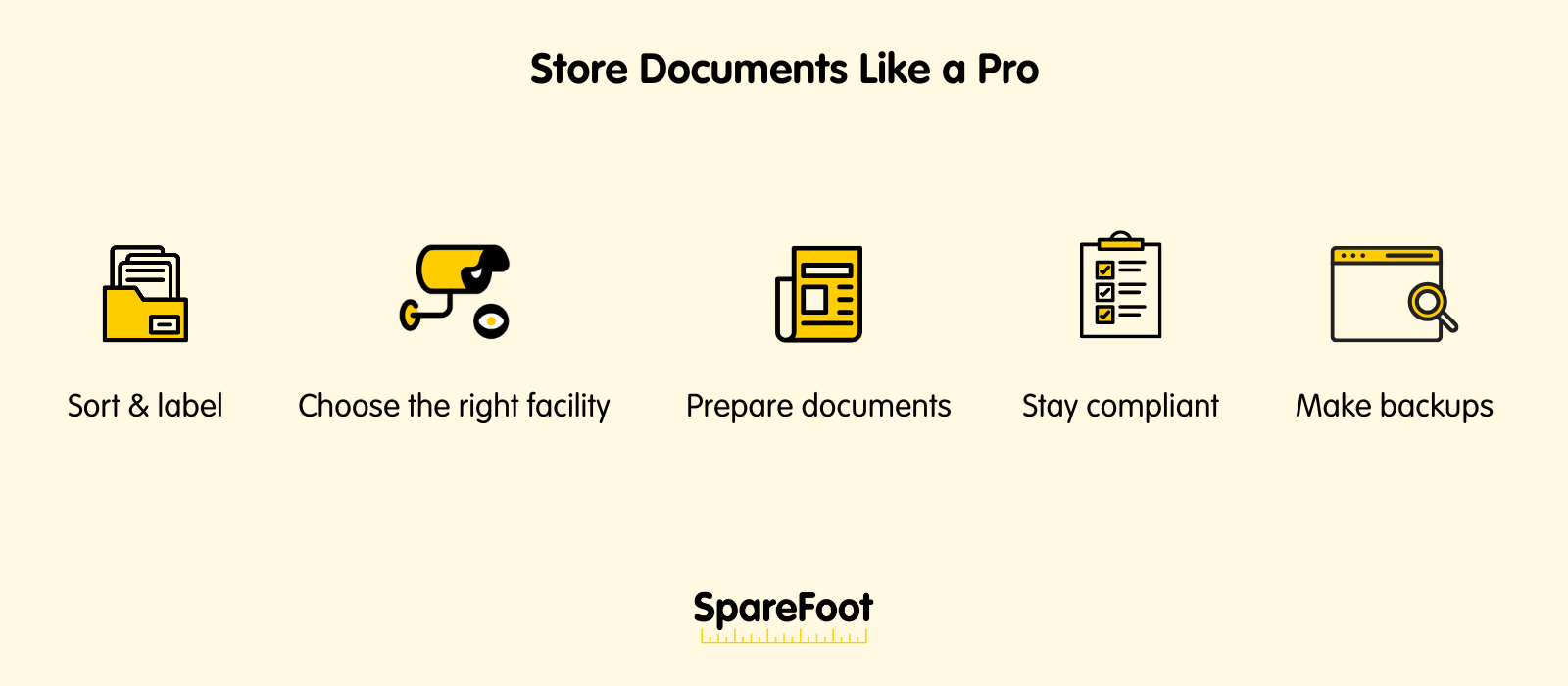
Document storage is not just a task to check off your professional or personal list. This must-have habit can save you time and protect your privacy in the long run. You’ve seen the steps, the tips, and the tricks. Now, it’s all about putting them into action. Here’s a quick recap:
- Sort and label. Organize and categorize your documents for easy access.
- Choose the right facility. Look for secure, climate-controlled storage with firelock vaults, barcode tracking, file indexing, and good reviews. Ask about their use of special collection libraries’ standards for sensitive documents.
- Prepare documents for storage. Use durable document storage boxes, archival boxes, or acid-free storage boxes, elevate them, and keep an inventory using desk organizers and paper organizers for active files.
- Stay compliant. Know the legal requirements for document retention.
- Make backups. Keep digital copies, secure them, and update them regularly.
When you evaluate record storage facilities, you aim to find that trusted partner for important document storage. That is an investment in peace of mind and operational efficiency. Don’t wait for a mishap to think about document safety. Explore your archival storage solution options today—from desk organizers and drawer dividers for everyday use to cloud storage for digital backups and professional record storage boxes for long-term preservation. Give your documents and family heirlooms the protection they deserve.
Don’t wait for a mishap to think about document safety. Explore your document and paper storage options today and give your documents the nice protection they deserve.

Andreea Draguleasa
Andreea Draguleasa showed an affinity for foreign languages and literature at an early age and started writing when she was 6. She studied journalism, advertising, and public relations at the University of Bucharest and worked as a content writer for a tourism agency and as a journalist for a magazine in the hospitality industry until 2010. After seven years as marketing manager for a Home & Deco online shop, she realized that learning something new every day brings her the most joy, so she went back to researching and writing informative articles. Through her experience traveling the world, she's picked up tips and resources she now shares on self storage solutions. When not writing about home organizing and storage, Andreea spends most of her time reading, playing video games, and spoiling her cat.